Mixed Container Loading for Flooring and Wall Panel Buyers
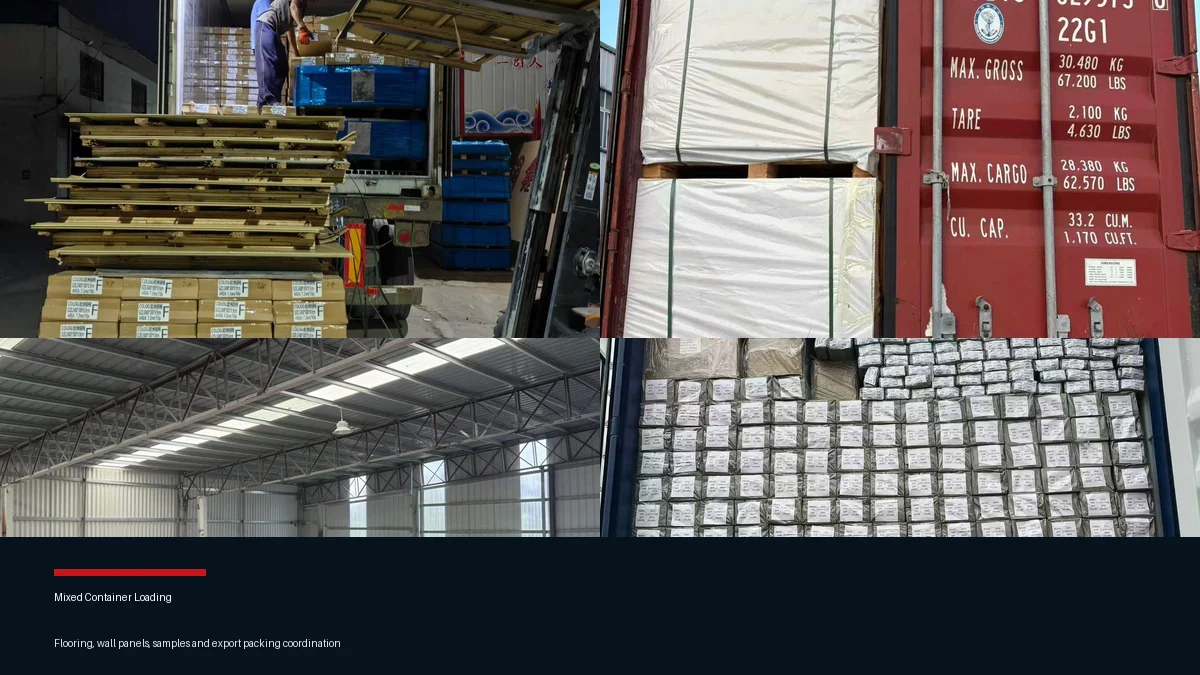
Many building material importers do not buy only one product. A buyer may need SPC flooring, acoustic panels, SPC crystal wall panels, UV boards and outdoor PE wood-plastic in the same shipment. Mixed container loading helps buyers test product lines, reduce sourcing complexity and build a broader catalogue without committing to a full container for every item.
Why Mixed Containers Are Useful
Mixed containers allow importers to combine several product categories in one shipment. This is useful for distributors, showrooms, project suppliers and private-label buyers who want to test a full decorative material range. It also helps new buyers understand local demand before placing larger single-product orders.
Products That Can Be Combined
A mixed container may include SPC flooring, SPC crystal wall panels, acoustic wall panels, UV boards, carbon crystal boards, outdoor PE wood-plastic and sample boards. The product mix should be planned around carton size, weight, packing protection and loading order. Heavy or rigid items should be arranged carefully so they do not damage lighter panels during transport.
Confirm the Loading Plan Early
Mixed-container orders require clearer planning than single-product orders. Buyers should confirm the quantity of each product, carton marks, pallet method, product labels, packing dimensions and whether any samples or display boards are included. If OEM packaging is needed, artwork and carton information should be checked before production.
Documentation and Shipment Photos
For export buyers, shipment photos and loading records are useful. They help the buyer confirm that the correct categories, carton marks and quantities were loaded. Photos also support communication with local warehouses and customers after the container arrives. Roovtech can coordinate loading-related confirmation based on order requirements.
Practical Buying Advice
For a first mixed container, keep the product mix focused. Choose a core product such as SPC flooring, add related wall panel categories, and include samples or color boards for future selling. After the buyer sees which categories move fastest locally, the next order can be expanded with better quantity allocation.
Start With One Main Product
A mixed container works best when it has one clear main product. For example, the buyer can use SPC flooring as the core quantity, then add wall panels, samples or outdoor products around it. If every category is treated as equally important, the loading plan and later sales plan can become messy.
Make Carton Marks Easy to Read
When several products are loaded together, carton marks are not a small detail. Clear marks help the buyer’s warehouse separate products quickly after arrival. They also reduce mistakes when samples, stock goods and project goods are in the same shipment.
Ask for Loading Photos
Loading photos are useful for both sides. They give the buyer a record of what was shipped and help the supplier show that the order was arranged according to plan. For first-time cooperation, this simple step builds trust and makes later containers easier to manage.
Keep Samples Separate From Stock Goods
When samples, color boards and normal stock goods are loaded together, they should be marked clearly. Otherwise the buyer may spend time looking for small sample cartons after the container arrives. This sounds minor, but for a showroom or distributor preparing a launch, finding samples quickly can affect how fast local sales work starts.
Make the Loading Plan Easy to Check
Mixed containers are easier to manage when each product line has simple carton marks and a separate packing list. Samples, color boards and spare accessories should not be buried inside stock cartons without a note. Before shipment, buyers should ask for loading photos that show product sequence, carton marks and the final container seal. These records make receiving and after-sales communication much faster.
FAQ
Can different building materials be loaded in one container?
Yes. Products can be combined when packing size, loading sequence, product weight and carton protection are planned correctly.
Is mixed container loading useful for new importers?
Yes. It helps buyers test several product lines before committing to large single-product orders.
Can Roovtech provide loading photos?
Roovtech can support loading coordination and shipment-related photo confirmation based on order requirements.